Splat Journal

Algorithmic imprints of disappearing spaces

Tag: Brittany

  • Port-Blanc — The Rocher du Voleur

    Port-Blanc — The Rocher du Voleur

    Field notes — Port-Blanc, Penvénan, Côtes-d’Armor, Bretagne

    → English below


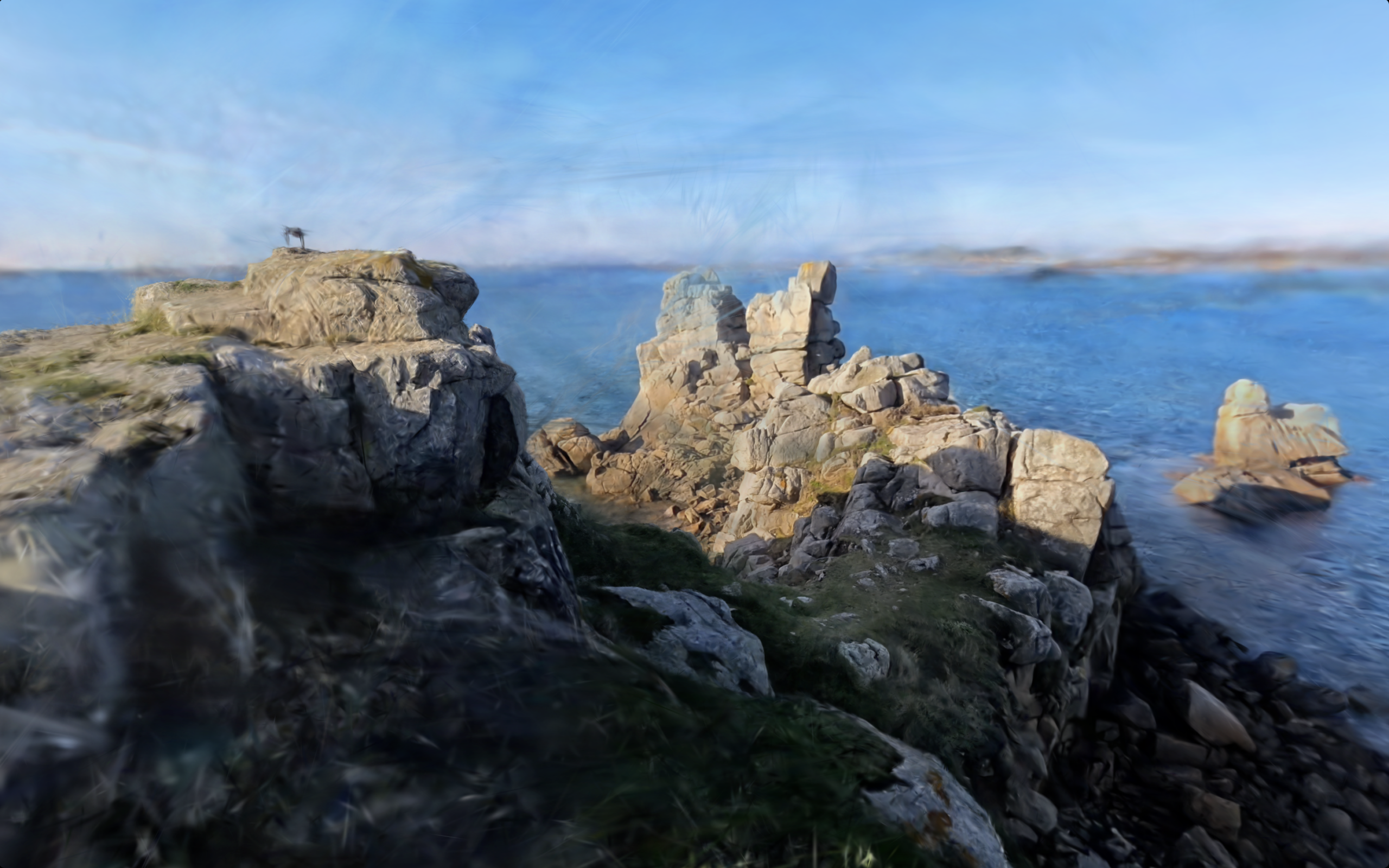
    Port-Blanc, Penvénan, le Rocher du Voleur.
    Sentier côtier sur la falaise, reconstruit par Gaussian Splatting.

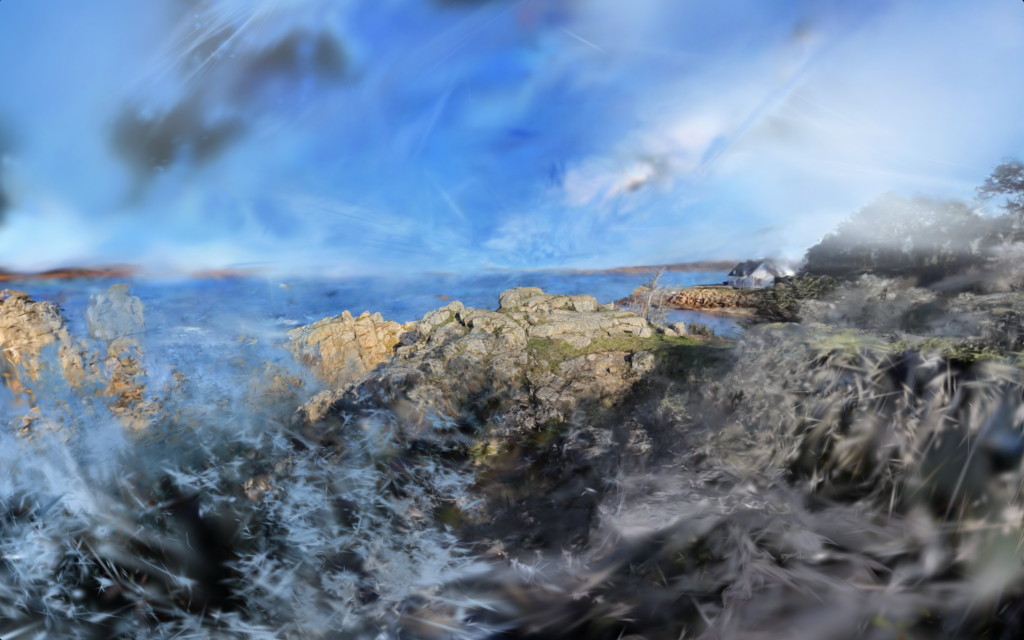
    • Seuls les éléments proches de la trajectoire de capture sont restitués avec précision : la roche, le chemin, l’herbe rase.
    • L’horizon reste flou et instable, totalement dépendant du point de vue du spectateur dans la scène entre ciel, terre et mer.
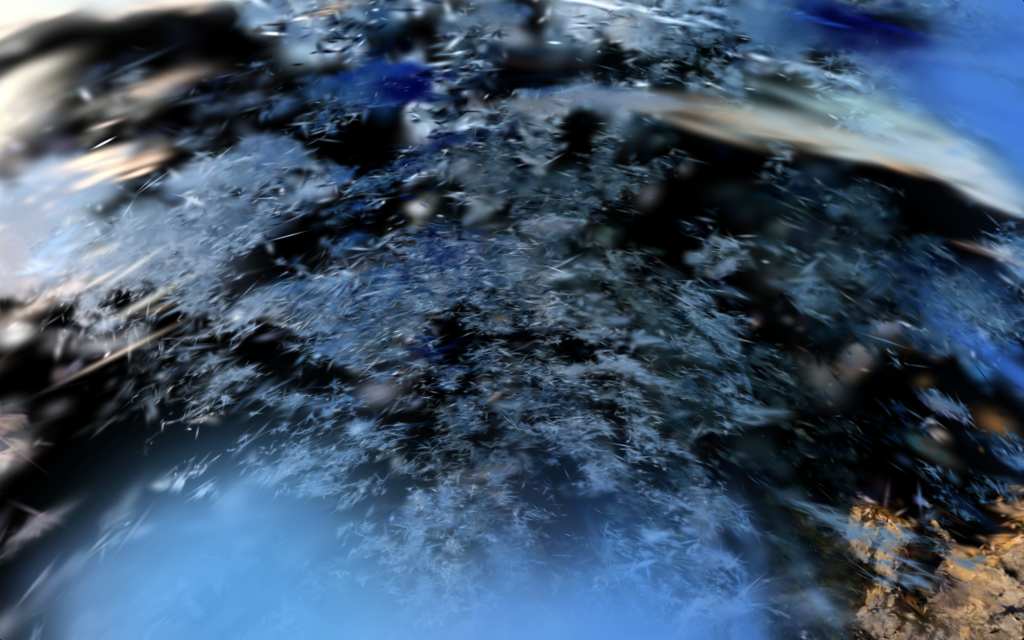
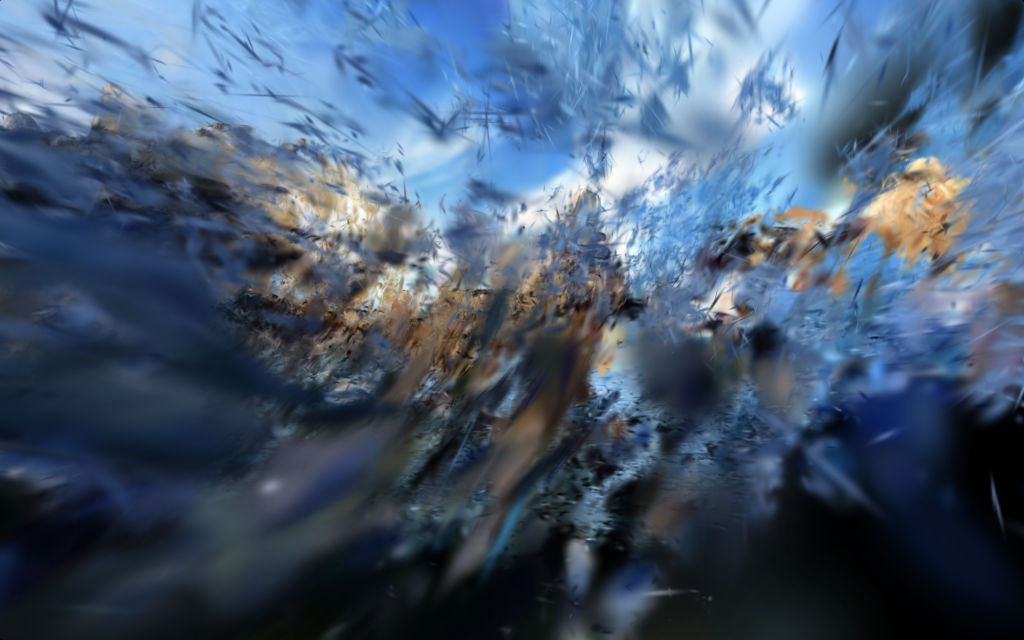
    • La mer ne peut pas être capturée — constamment en mouvement, elle échappe à l’algorithme qui a besoin de surfaces stables. Elle se dissout dans un ensemble uniforme de splats flous de loin, qui éclate en particules abstraites de près. En dirigeant le regard vers l’eau, la mer devient un champ de particules qui composent une surface que l’algorithme n’a jamais vraiment vue.
    • En changeant la hauteur du point de vue dans la scène, on voit apparaître plusieurs nappes de splats à différentes altitudes. L’algorithme a créé ces layers pour satisfaire différents points de vue du dataset — traces de cette logique de reconstruction par vues.
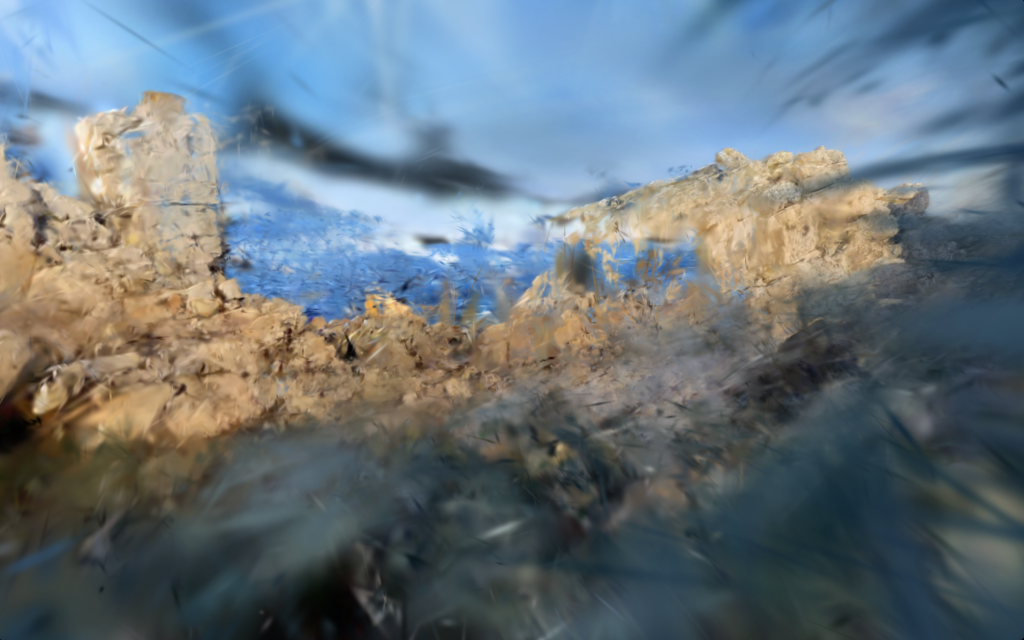
    • Les images à la limite du radiance field révèlent la structure de la reconstruction : captures de vues en plongée, contre-plongée, depuis les bords de la zone capturée.
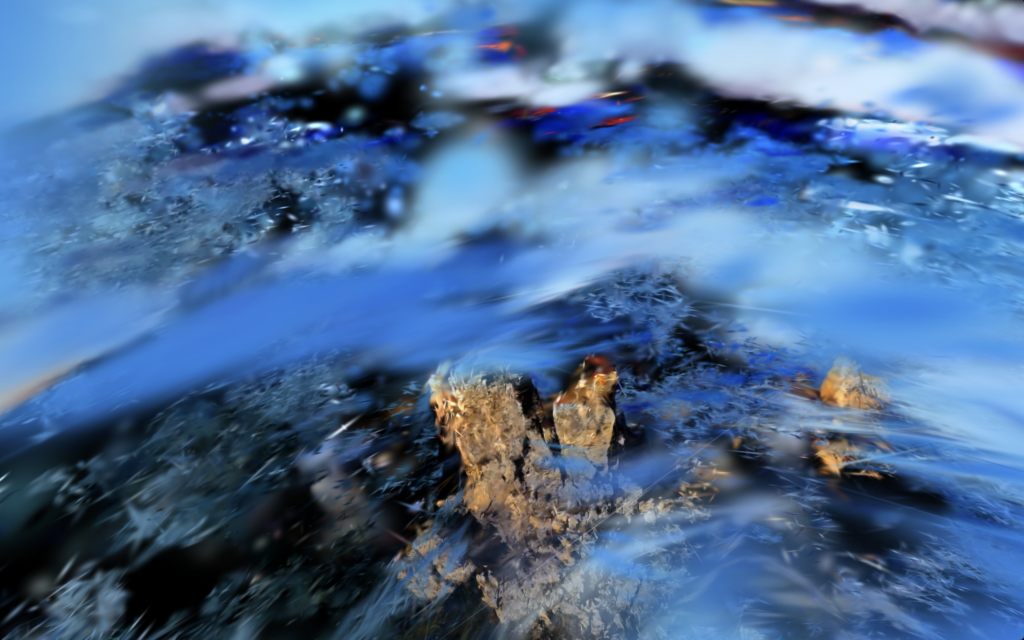
    • Il est possible d’avoir une vue “depuis sous l’eau” sans jamais y être entré.

    Se balader dans la reconstruction révèle ses limites.


    Port-Blanc, Penvénan — the Rocher du Voleur.
    Coastal cliff path, reconstructed with Gaussian Splatting.

    • Only elements close to the capture path are rendered with precision: rock, path, sparse grass.
    • The horizon remains blurred and unstable, entirely dependent on the viewer’s point of view within the scene — between sky, land and sea.
    • The sea cannot be captured — constantly in motion, it escapes the algorithm that needs stable surfaces. From a distance it dissolves into a uniform field of blurred splats; up close it bursts into abstract particles. Directing the gaze toward the water, the sea becomes a field of particles composing a surface the algorithm never truly saw.
    • Changing the height of the viewpoint in the scene reveals several layers of splats at different altitudes. The algorithm created these layers to satisfy different points of view from the dataset — traces of this view-based reconstruction logic.
    • Images at the edge of the radiance field reveal the structure of the reconstruction: overhead views, low angles, from the margins of the captured zone.
    • It is possible to have a view “from underwater” without ever entering it.

    Walking through the reconstruction reveals its limits.


    1 — Interactive scene

    Gaussian Splatting — navigable scene (SuperSplat viewer)


    2 — Traveling through the reconstructed scene

    Coastal cliff traveling — Unreal Engine, particle forces via TouchDesigner


    Training

    Method: Gaussian Splatting (PostShot)
    Images: 1,020
    Aligned: 785 (RealityCapture)
    Splats: 1.6M
    Capture duration: 4:47 min
    360 POV frames: 277
    Location: Port-Blanc, Penvénan, Côtes-d’Armor, Bretagne — outdoor / spring

    Interaction

    Player: Unreal Engine
    Particle forces: TouchDesigner — MIDI to OSC

    Processing

    Post-clean: none


    3 — Gaussian Splatting training

    Gaussian Splatting training — 1.6M splats (PostShot)


    4 — Raw 360° capture

    Source footage — Insta360 X4, equirectangular projection, 4:47 min


    5 — Scene captures
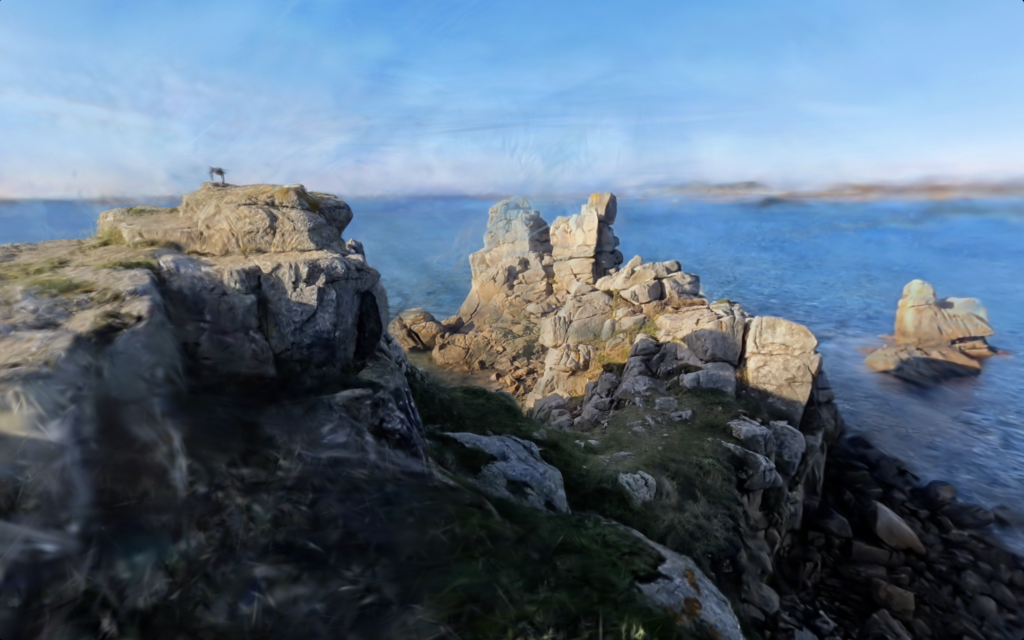
    Gaussian Splatting Port-Blanc Brittany — coastal rocks Rocher du Voleur
    Scene capture — coastal rocks, Rocher du Voleur
    Gaussian Splatting Port-Blanc Brittany — rocks and sea viewpoint
    Radiance field frontier — lateral view
    Gaussian Splatting Port-Blanc Brittany — radiance field frontier lateral view
    Gaze toward the sea — surface as splat material
    Gaussian Splatting Port-Blanc Brittany — radiance field top view abstract
    Radiance field — top view, abstract capture
    Gaussian Splatting Port-Blanc Brittany — sea surface as particles
    Abstract capture — lateral view
    Gaussian Splatting Port-Blanc Brittany — abstract capture from underwater viewpoint
    Abstract capture — from “underwater”, out of field

    Part of an ongoing research on navigable volumetric reconstructions and the limits of algorithmic capture.

    Nicolas Mimault, Bagnolet / Paris · nmimault@gmail.com
  • Port-Blanc — Coastal path reconstruction

    Port-Blanc — Coastal path reconstruction

    Field notes — Port-Blanc, Penvénan, Côtes-d’Armor, Bretagne

    → English below


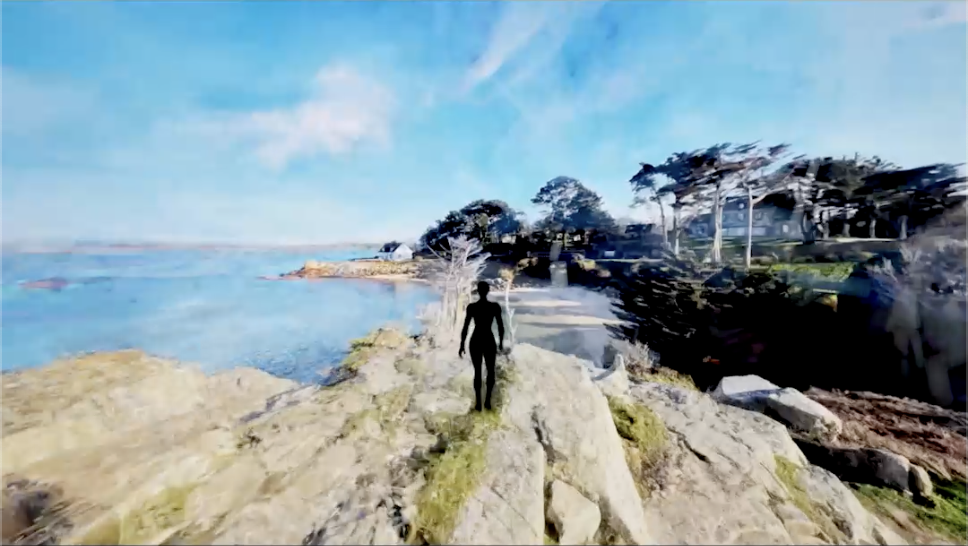
    Enfin le printemps. Le sentier côtier au-dessus de Port-Blanc, reconstruit en scène 3D navigable par Gaussian Splatting, rendu en temps réel dans un moteur de jeu.

    • L’avatar est en haut de la falaise — il peut regarder la côte, la mer vers l’horizon, se balader parmi les rochers et la végétation printanière. Un espace ouvert, entre terre et mer.
    • L’avatar a un corps dans l’espace reconstruit : une échelle, une présence physique dans un lieu qui n’existe plus vraiment. Mais il n’a pas d’ombre. Corps stable, purement virtuel, face à une capture de la réalité instable et fragmentée. L’avatar donne une échelle et une présence — il ancre le visiteur dans l’espace, rend l’immersion possible.
    • Les forces de particules répondent au passage de l’avatar — l’espace réagit au visiteur. Les splats se dispersent, révèlent leur nature de pixels de l’espace : la matière brute de l’archive.
    • On peut s’écarter du sentier, explorer la falaise, voir l’intérieur des rochers — des espaces que la caméra a longés mais jamais traversés.
    • Pour que l’avatar puisse se déplacer sur le terrain, j’ai dû ajouter des plateformes invisibles. Le sol de la reconstruction n’est pas un sol : c’est une image. Il a fallu construire une géographie praticable par-dessus la géographie capturée.
    • Le dispositif permet de passer de la troisième à la première personne. En troisième personne, l’avatar nous projette comme sujet dans l’espace — on est dans le lieu. En première personne, le regard devient plus immersif : on peut s’arrêter sur un détail, s’approcher d’une surface, observer ce que la troisième personne survole.

    Est-ce qu’on se promène dans un souvenir ? Que se passe-t-il quand un corps stable traverse un espace instable ?


    Finally spring. The coastal path above Port-Blanc, reconstructed into a navigable 3D scene using Gaussian Splatting, rendered in real time in a game engine.

    • The avatar stands at the top of the cliff — it can look along the coastline, toward the sea and the horizon, and wander among the rocks and spring vegetation. An open space, between land and sea.
    • The avatar has a body in the reconstructed space: a scale, a physical presence in a place that no longer truly exists. But it casts no shadow. A stable body, purely virtual, facing an unstable and fragmented capture of reality. The avatar provides scale and presence — it anchors the visitor in the space, makes immersion possible.
    • Particle forces respond to the avatar’s passage — the space reacts to the visitor. Splats scatter, revealing their nature as space pixels: the raw material of the archive.
    • It is possible to leave the path, explore the cliff, see inside the rocks — spaces the camera walked alongside but never entered.
    • For the avatar to move across the terrain, I had to add invisible platforms. The floor of the reconstruction is not a floor: it is an image. A walkable geography had to be built on top of the captured geography.
    • The device allows switching between third and first person. In third person, the avatar projects us as subject into the space — we are in the place. In first person, the gaze becomes more immersive: one can pause on a detail, approach a surface, notice what the third-person view passes over.

    Are we walking through a memory? What happens when a stable body moves through an unstable space?


    1 — Traveling through the reconstructed scene

    Coastal path reconstruction — Unreal Engine, particle forces via TouchDesigner


    Interaction

    Player interaction: Unreal Engine
    Particle system forces: TouchDesigner — MIDI to OSC

    Training

    Method: Gaussian Splatting (PostShot)
    Images: 1,020
    Aligned: 785 (RealityCapture)
    Splats: 1.6M
    Capture duration: 4:47 min
    360 POV frames: 277
    Location: Port-Blanc, Penvénan, Côtes-d’Armor, Bretagne — outdoor / spring

    Processing

    Post-clean: none


    Part of an ongoing research on navigable volumetric reconstructions and the limits of algorithmic capture.

    Nicolas Mimault, Bagnolet / Paris · nmimault@gmail.com