Field notes — Orcières Merlette, Hautes-Alpes, French Alps
→ English below
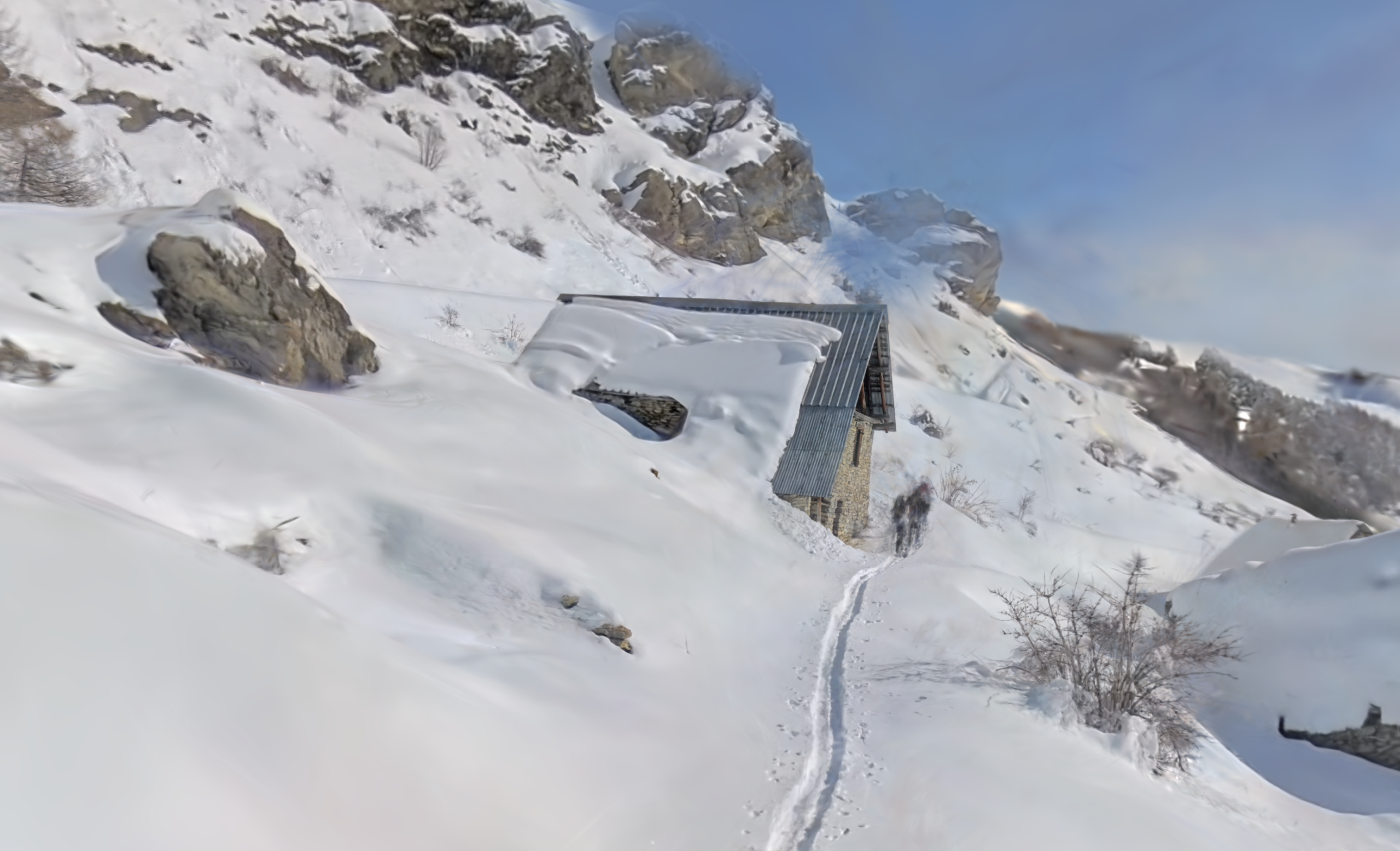
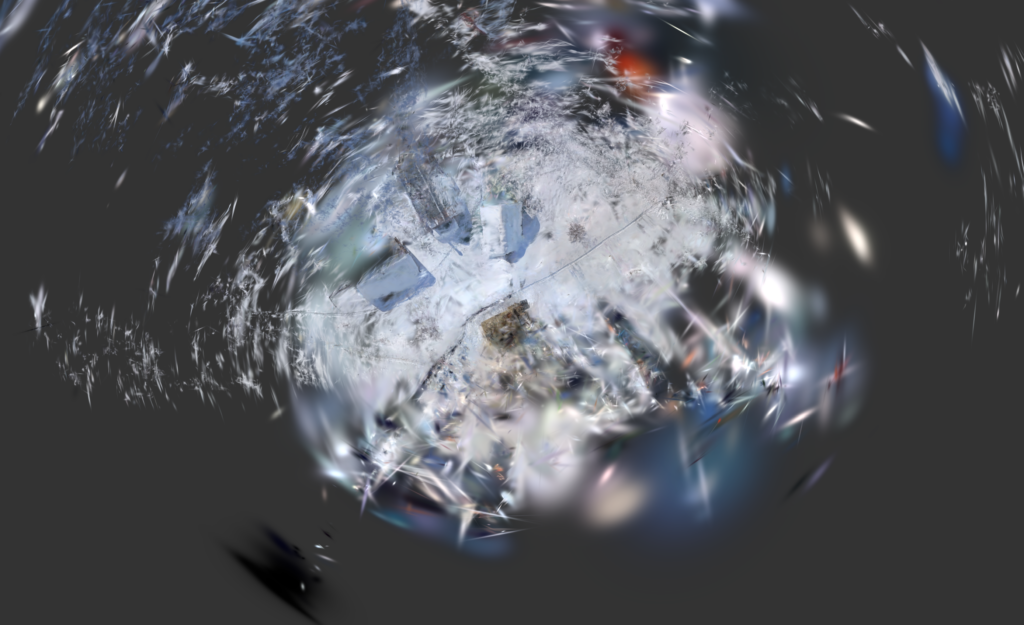
Les skieurs qui avancent sur la piste créent des artefacts qui révèlent les limites de ce que l’algorithme peut reconstruire à partir d’éléments en mouvement dans le dataset. Capture réalisée à ski, caméra sur perche balancée de gauche à droite, un geste pour élargir le point de vue. Ce mouvement pendulaire introduit une variation latérale dans le dataset, mais aussi une instabilité propre au dispositif : flou de mouvement, changements d’angle rapides, reconstruction partielle des alentours.
Ghost-like traces in the reconstructed scene. Skiers moving ahead on the trail create artifacts that reveal the limits of what the algorithm can reconstruct from moving elements in the dataset. Single-path capture on skis, camera swung left to right on a pole, a gesture to broaden the viewpoint. This pendular motion introduces lateral variation into the dataset, but also instability inherent to the device: motion blur, rapid angle changes, partial reconstruction of the surroundings.
1 — Interactive 3D viewer
Gaussian Splatting — navigable scene (SuperSplat viewer)
2 — Training timelapse
Gaussian Splatting training — 48k iterations (PostShot, × 20 timelapse)
3 — Traveling through the reconstructed scene
Traveling through the reconstructed environment — Unreal Engine, XV3DGS plugin
Training
Method: Gaussian Splatting (PostShot)
Images: 962
Splats: 1.6M
Iterations: 48k
Alignment: RealityCapture — 898 aligned images
Processing
Post-clean: none
Capture
Camera: Insta360 X4
Projection: equirectangular
Capture duration: 2:00 min
Location: Orcières Merlette, Hautes-Alpes, French Alps — outdoor / ski resort
4 — 360° capture excerpt
Source footage — Insta360 X4, equirectangular projection, swing motion, 2:00 min
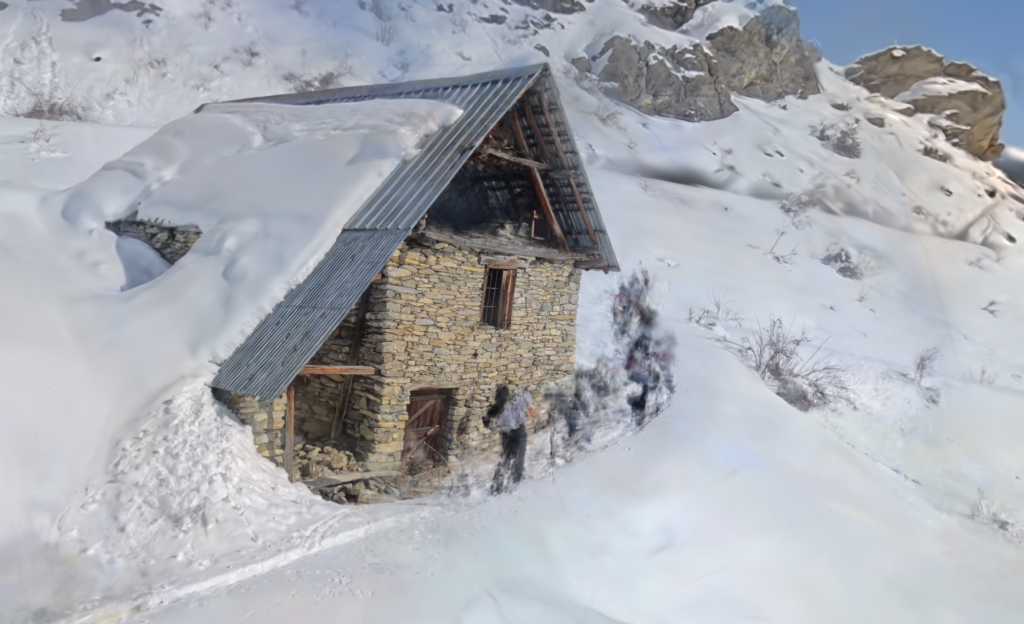
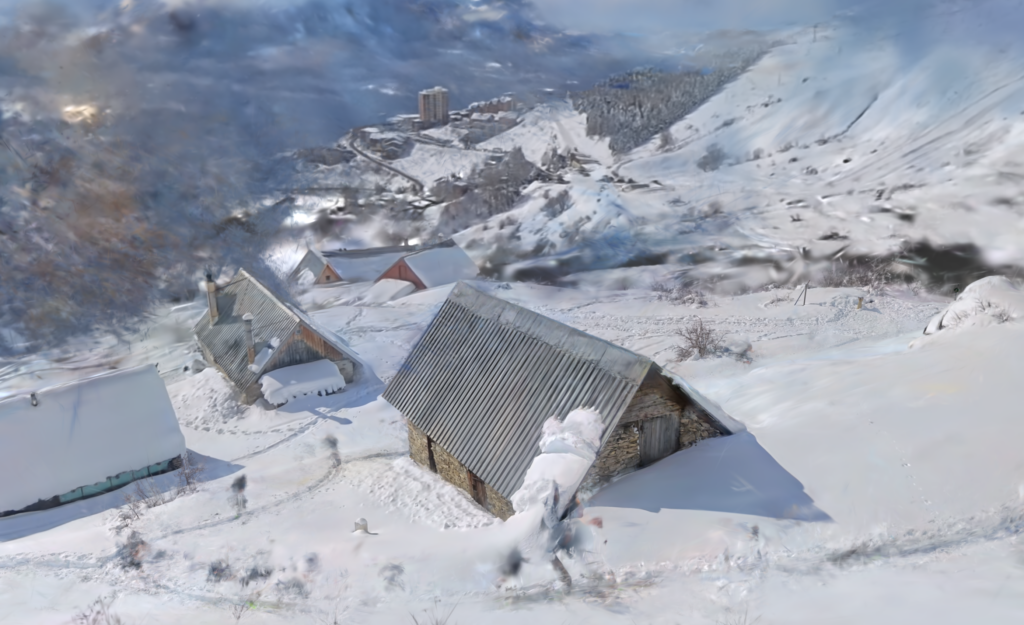
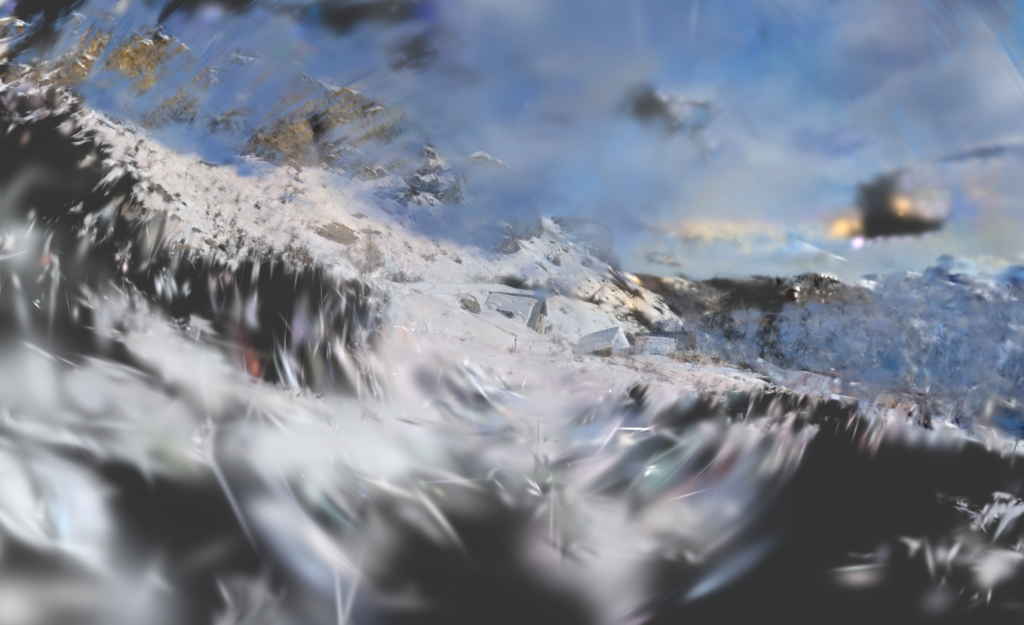
5 — Scene captures
Part of an ongoing research on reconstruction instabilities and viewpoint-dependent artifacts in Gaussian Splatting.
Nicolas Mimault, Bagnolet / Paris · nmimault@gmail.com